Could You Have a Leak?
Possible leaks and easy ways to identify them. Tap each step as you go.
Toilet leaks can waste up to 200 gallons a day and can double a family’s water use and bill. Make sure to do yearly inspections on toilets to check for the most common type of leak: a deteriorated or improperly installed flush valve (flapper) at the base of the toilet tank that is not creating a tight seal.
The Two Main Toilet Leaks
Flush Valve Seat Improperly Sealing
How to check:
- Take the lid off the tank and wait for it to fill completely.
- Put a color dye tablet or a few drops of food coloring into the tank water.
- Wait a minimum of 20 minutes, and do not flush the toilet.
- If you see any color in the toilet bowl, you have a leak.
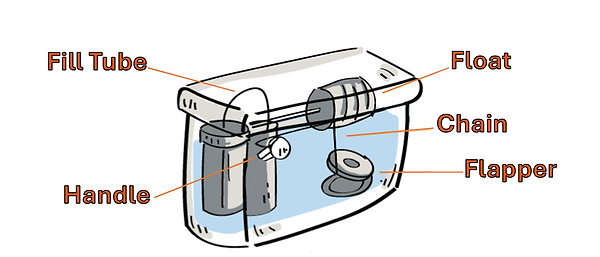
Broken Fill Valve
Attached to the float, or combined with the float. How to check:
- Remove the lid from the toilet tank.
- Flush the toilet.
- If you see water still draining after the tank refills, you should replace your fill valve assembly.
Faucets & Irrigation
Leaking Faucet
How to check:
- Place an empty cup underneath the faucet.
- Check the cup every few hours.
For indoor faucets, make sure to check below any cabinets. For exterior faucets, check the ground around the faucet to make sure it is not an underground leak.
Irrigation System Using a Lot of Water?
How to check:
- Check automated irrigation systems regularly to make sure they are working properly.
- Make sure your irrigation system has no broken sprinkler heads.
- Look at the sprinkler valve and make sure it is not stuck on. A stuck valve can waste an extremely large quantity of water.
- Make sure the irrigation timer is programmed correctly and not overwatering.
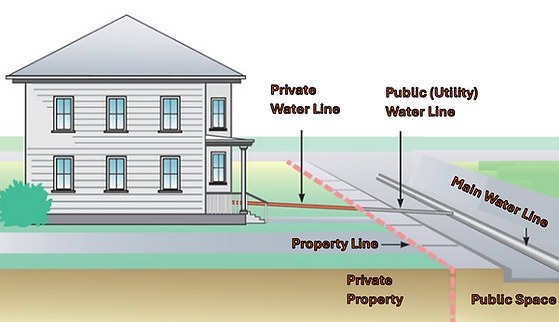
Is the Leak in Your Home or the Water Line?
Insects or animals, such as spiders and snakes, may take shelter in the water meter box, so use caution when opening the lid. Do not touch or tamper with the water meter itself. This is considered tampering with a public utility and may result in fines.
Get Ready
- Make sure all water fixtures, including faucets, toilets, showers and appliances, are turned off in the house.
- Carefully open the lid of the water meter box, watching for insects or animals.
Check the Water Meter
- Look at the meter.
- If the meter dial is spinning, or the numbers on an electronic meter are increasing, you may have a leak.
Is It Inside the House?
- Turn off the water at the house shut-off valve, usually near where the main water line enters the house or garage.
- Check the water meter again.
- If the meter dial is still spinning, or the reading is still increasing, it suggests a leak between your house and the water meter.
Answer Two Quick Questions
With every fixture in the house turned off, is the meter dial spinning or the reading increasing?
Now turn off the water at the house shut-off valve. Is the meter still moving?
Perform a visual inspection of common areas for leaks, including under sinks, around toilets and near water-using appliances.
If a leak is found, take immediate action to repair it, or contact a plumber for help.
We're Here to Help
Questions about your bill, service or water hauling? Reach our customer service team during office hours.
Open Monday–Friday, 8:00 a.m.–2:00 p.m.
- Office(928) 925-4837
- HoursMon–Fri, 8:00 a.m.–2:00 p.m.
- Mailed PaymentsPO Box 682288, Houston, TX 77268-2347